
How to Choose a Ceiling Fan That Complements Your Interior
A ceiling fan needs to do more than move air. Its size, finish, blade shape and lighting options can influence how balanced the space feels. The challenge is finding a model that performs efficiently without looking like an afterthought.
For homeowners comparing Designer Ceiling Fans, Decor Lighting offers a starting point for considering style alongside practical requirements.
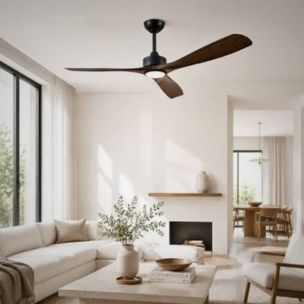
Table of Content |
Choosing Designer Fans for the Right Room
Start by matching the fan to the room rather than choosing based only on appearance. Measure the space and consider ceiling height, furniture placement and the area that needs airflow. An undersized fan may circulate air poorly, while an oversized model can dominate a compact room.
Consider the interior style too. Clean-lined fans can suit contemporary spaces, while timber-look blades may work with natural materials and warmer palettes. In bedrooms, quiet operation and simple controls may matter more than a statement silhouette.
Check:
- Recommended room size and blade span
- Ceiling height and mounting requirements
- Motor speed and airflow performance
- Available control options
- Whether an integrated light is needed
Finding a Style That Works Across Interiors
Searching for Designer ceiling fans australia can reveal many finishes and forms, but appearance should be assessed in context. A fan should complement existing hardware, furniture and lighting rather than compete with them.
A matte finish can blend with minimalist interiors, while timber or wood-effect blades can introduce warmth into neutral rooms. Metallic details may coordinate with pendant lights or cabinet hardware. If the fan includes a light, consider whether its brightness and colour temperature support the room's existing lighting.
Visual continuity matters, so relate the fan to a few existing finishes rather than trying to match everything exactly.
Performance Matters as Much as Appearance
A stylish fan must also provide appropriate airflow. Look beyond blade count and consider motor technology, speed settings, airflow direction and controls. Reverse functionality can also be useful when the fan is used across different seasons.
Ceiling height deserves attention. Standard mounting may not suit every room, particularly where ceilings are unusually high or low. The correct mounting option supports effective performance and safe positioning.
Energy use also matters when the fan operates for several hours each day.
When Architectural Fans Suit the Design
Architectural ceiling fans are worth considering when the fan needs to become part of the room's visual composition. Their proportions, materials and streamlined detailing can work well in open-plan living areas, larger bedrooms and contemporary interiors.
Consider surrounding architecture, sightlines and ceiling scale. In open-plan rooms, it should relate to nearby lighting and furniture zones. In smaller bedrooms, a simpler profile may create balance.
Compare options using the same practical criteria:
| Feature | What to consider | Why it matters |
| Blade span | Room dimensions | Influences airflow coverage |
| Motor | Efficiency and noise | Affects comfort and running costs |
| Mounting | Ceiling height | Supports suitable positioning |
| Controls | Remote or wall options | Makes daily operation easier |
| Light | Output and colour temperature | Coordinates room lighting |
Making the Final Choice
Once you have narrowed down the style, compare room-size guidance, installation requirements, control compatibility and warranty information. Consider when the fan will operate and which controls will be convenient.
Future maintenance matters too, particularly the finish and accessibility of controls.
FAQs
What size ceiling fan should I choose?
It depends on room dimensions, ceiling height and layout. Follow the manufacturer's room-size guidance.
Are ceiling fans suitable for bedrooms?
Yes. Look for quiet operation, appropriate airflow and convenient controls.
Do ceiling fans need to match other fixtures?
No. Coordinating finishes with existing lighting and hardware can create cohesion without an exact match.
Is an integrated light necessary?
Not always. It can be useful where the fan occupies the main lighting point, but separate lighting may offer greater flexibility.
Should I hire a professional for installation?
Use a qualified professional where required. They can also confirm that the mounting arrangement suits the ceiling structure.
Conclusion
Choosing a ceiling fan involves balancing airflow, efficiency, installation requirements and interior style. By considering room dimensions, ceiling height, existing finishes and everyday controls, you can narrow the options without relying on appearance alone. For anyone comparing Ceiling Fans Adelaide, the same principle applies: select a model that meets the room's technical needs while fitting naturally into its design. A thoughtful choice should feel integrated and remain practical after installation.