
Before You Buy: The 4 Big Mistakes People Make With Traditional Lighting
Have you ever been in a friend's house after they redecorated, and you know it's expensive even though nothing in there looks expensive? “Nine times out of ten, that’s the lighting doing its quiet thing in the background.”
Now think about your own place. Now, turn on the light switch in your hallway. Does it feel like a house? Or a waiting room?
If you hesitated, that is your answer. And it's probably not your furniture's fault; it's your light fittings.
This is where traditional lighting comes in and why it deserves way more thought than the twenty minutes most of us give it.
What Do We Actually Mean by "Traditional Lighting"?
Think hand-forged iron, turned brass and blown glass, shapes that are symmetrical and have real weight, literally and visually.
It’s not the age of something that makes it “traditional”. It’s the intent. The curves are all purposeful, the materials are chosen to look good for thirty years, not just this season.
The weathered bronze lantern in an entry hall doesn't compete with the room. It holds it up. That’s the silent strength of traditional lighting: it accomplishes a lot without ever shouting.
Five Styles People Mistake for Traditional
“Traditional” isn’t a single look. It’s a family of styles, and choosing the wrong one is how you end up with something that reads as dated rather than timeless.
- Colonial/Federal – candelabra arms, tapered shades, deep mahogany. Suits formal dining rooms and high-ceilinged entry halls.
- Victorian/Edwardian – ornate ironwork, etched glass, jewel tones. Needs height to breathe; in a low room, it loses its drama.
- Craftsman/Arts and Crafts – hammered copper, amber slag glass, and clean horizontal lines. Grounded and great in open-plan spaces.
- French Provincial – cream-painted iron, floral glass, distressed gold. Pairs naturally with stone benchtops and raw timber.
- Mediterranean/Tuscan – wrought iron, terracotta tones, chunky lantern shapes. Ideal for verandahs and outdoor entertaining.
Walking into a fan and light shop in Adelaide, already knowing which style fits your home, saves a lot of back-and-forth. Any decent local specialist should talk you through the differences on the spot.
Why Adelaide Homes Need This Conversation
Adelaide's housing stock is older than most Australian capitals, and that changes the equation. Bungalows in Prospect, bluestone cottages in North Adelaide, Federation homes in Norwood, and Edwardian villas in Unley and Colonel Light Gardens. These houses were designed around a certain kind of light, and modern fittings don't speak the same language.
In practical terms:
- High corniced ceilings need fixtures with real visual presence; a slim pendant just vanishes
- Deep verandahs call for solid lanterns, not shopping-centre downlights
- Timber-panelled hallways need warm filament or amber glass, not cold LEDs in a chrome ring
A sleek contemporary fitting in a 1920s bungalow creates a subtle clash most people sense but can't name. Traditional lighting fixes this almost instantly, because it speaks the same architectural language as the house.
The Kitchen Is Where Most People Get It Wrong
The kitchen is the one room where going fully traditional doesn't work. Bench areas and prep zones need proper, shadow-free light; a pretty pendant alone won't cut it, no matter how good your modern kitchen lighting elsewhere looks.
The fix is to layer it. This is where modern kitchen lighting earns its place:
- Recessed LEDs directly over the bench
- Strip lighting under the overhead cabinets
- Track lighting angled over the cooking zone
Good modern kitchen lighting isn't about ditching character; it's about placement. Once the functional side is sorted, add one or two traditional pendants over the island as the visual anchor. Aged-brass pendants with warm Edison-style bulbs soften what would otherwise be a clinical modern kitchen lighting setup and tie your appliances back into the home's character. The pendant sets the mood; the functional lighting does the work.
Four Mistakes Worth Knowing Before You Buy
Wrong scale. A 500 mm chandelier in an 8 m room looks apologetic. Rough rule: add your room's length and width in metres, convert to centimetres, and that's your approximate diameter.
Mismatched finishes. Brushed nickel handles next to oil-rubbed bronze pendants create a clash that the eye notices even when the brain can't explain why.
Pressed metal pretending to be forged iron. Real traditional lighting has weight. A cheap pressed-metal fitting feels hollow and throws flat, lifeless shadows.
Wrong bulb temperature. Traditional fittings want warm white, 2700K or below. A 4000K daylight bulb in vintage brass undoes the whole point of buying traditional lighting.
This is why it's worth visiting a fan and light shop in Adelaide in person; you can hold the fitting, see it lit properly, and check the finish before committing to it.
Layering: Why One Pendant Isn't Enough
Rooms that feel genuinely warm have three layers working together, not one statement piece doing everything.
Ambient is your baseline: a chandelier, semi-flush mount, or lantern fitting.
Task lighting goes where work happens: reading lamps, picture lights, and under-cabinet strips.
Accent lighting is purely decorative: table lamps, wall sconces, and uplights that add depth without extra brightness.
Put all three on separate dimmers, and the room shifts from "lit" to atmospheric. One pendant alone just gives flat light, which is exactly why traditional lighting is rarely a one-fixture job.
What to Ask Before You Walk Into a Lighting Store
Among the best lighting stores Adelaide has to offer, the good ones won't blink at these questions:
- Do they stock a few traditional sub-styles, or just one generic "classic" range?
- Can you see fittings switched on in-store, not sitting cold?
- Do they carry dimmable warm-white LEDs for traditional fittings?
- Can they advise on sizing based on your ceiling height and room dimensions?
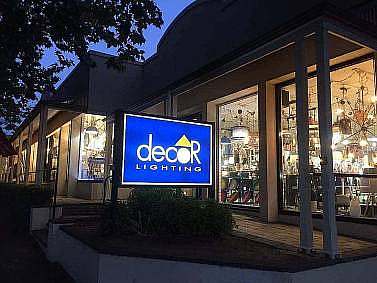
If a store can't answer confidently, it's probably not one of the best lighting stores Adelaide has on offer. At Decor Lighting, this is standard; the showroom exists because traditional lighting is a tactile decision.
Come and See It in Person. Browse the full range at decorlighting.com.au, or visit the Adelaide showroom, among the best lighting stores Adelaide has, with everything lit up properly and advice that's pressure-free.
FAQ
Can traditional lighting work in a contemporary home?
Yes, even one or two traditional pieces in an entry hall or dining room add warmth that modern interiors often lack, and the contrast usually makes both styles look better.
Are traditional fittings compatible with LED bulbs?
Most are. Use warm white LEDs at 2700K to 3000K with a CRI of 90+ to keep that golden glow.
How do I size a chandelier correctly?
Add your room's length and width in metres and convert to centimetres; and that's roughly your diameter. Go larger if your ceiling clears 2.7m.
What's the difference between a fan and light combo and a regular ceiling fan?
A combo puts both functions in one fitting. If you're browsing a fan and light shop in Adelaide, look for traditional-style versions with aged brass and timber blades; they suit Federation and Edwardian homes well.
How long does good traditional lighting last?
Solid brass and forged iron fittings routinely last 30 to 50 years. Higher upfront cost, much lower lifetime cost.
Where's the best place to find traditional lighting in Adelaide?
Decor Lighting carries one of the widest traditional ranges in South Australia, across all five styles, all displayed switched on. Visit decorlighting.com.au or come into the showroom.